
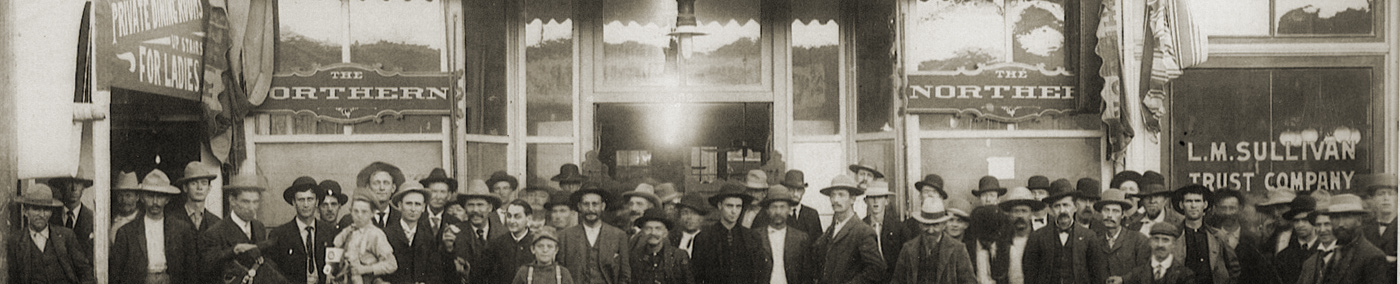
Jack Madigan – By Joni Eastley
According to the January 30, 1901 edition of the Albuquerque Tribune, gambler and gunfighter John “Jack” Madigan—thirty years old and a native of Illinois—left for Congress, Arizona Territory, intending to open a saloon.
By September of that same year, the Reno Evening Gazette reported that Madigan and two companions were instead bound for the new camp of Tonopah, where they planned to open what was euphemistically described as a “sporting house.” En route, the stage overturned on a grade fourteen miles from Sodaville, breaking Jack’s arm. In retrospect, he might have taken that mishap as an omen and remained in Reno.
When he eventually arrived in Tonopah, Jack distinguished himself by helping open one of the camp’s first saloons at the corner of Brougher and Main Streets, The Butler, in June 1902. His partner was Winfield Elliott—better known as “Ole.” The Tonopah Bonanza reported approvingly that “both proprietors are very popular men and understand their line of business.” Four short months later, Jack sold his interest in the saloon to George Cole and moved on to other pursuits, which almost certainly involved gambling and troublemaking. He also carried with him a deep and enduring grudge against Ole. Ole saved his earnings and built a stake; Jack, true to form, gambled his away.
By 1904, Ole Elliott had relocated to Goldfield, where he became involved in the Combination Mine and opened the Combination Cellar Saloon. Advertising “straight goods and case goods,” Ole promised patrons they could “draw your drink straight from the barrel.” Well known and widely respected, he quickly established himself as a solid businessman. By July of that year, he was constructing a hotel and had signed a lease with the State Bank and Trust Company of Carson City and Tonopah to open a branch in the front of a building he owned on Main Street.
Meanwhile, Jack Madigan’s resentment only deepened.
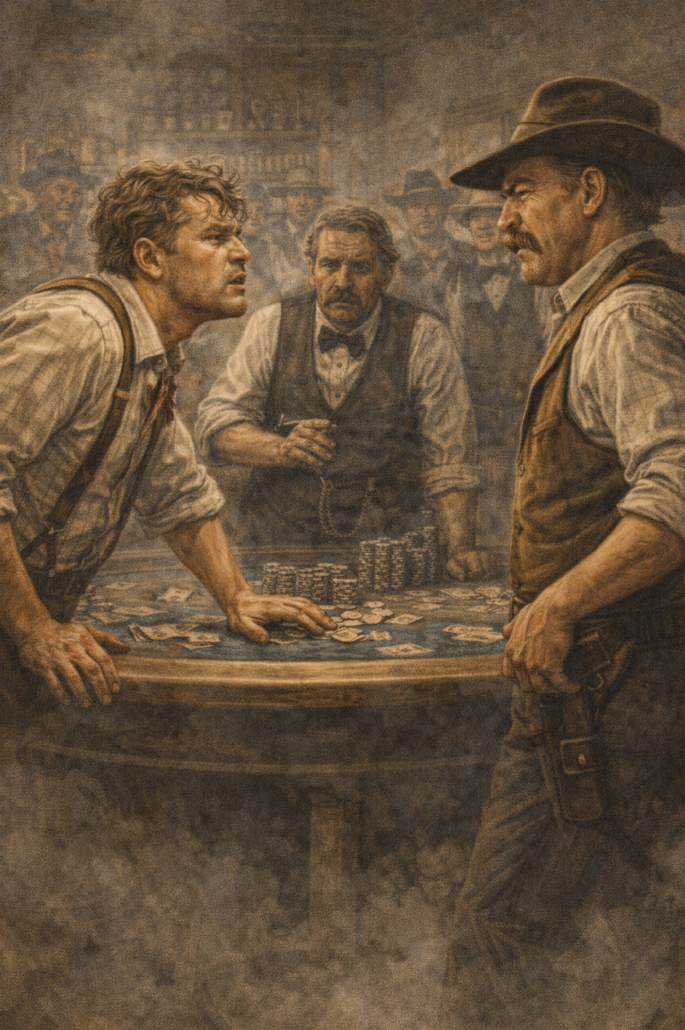
As midnight approached on August 13, 1904, a heavily intoxicated Madigan entered the Combination Cellar, accompanied by his grudge—and by a gambler named Joe Hamilton. The three went directly to the faro table. Jack slapped down $270 and demanded the dealer turn a card for that amount. When told the table limits were five and ten dollars, Jack responded by striking the dealer across the face.
Ole Elliott, who was nearby, immediately intervened. He told Jack that such behavior would not be tolerated and advised him that if he wanted a fight, he should take it elsewhere.
What followed seemed lifted from the pages of a dime novel.
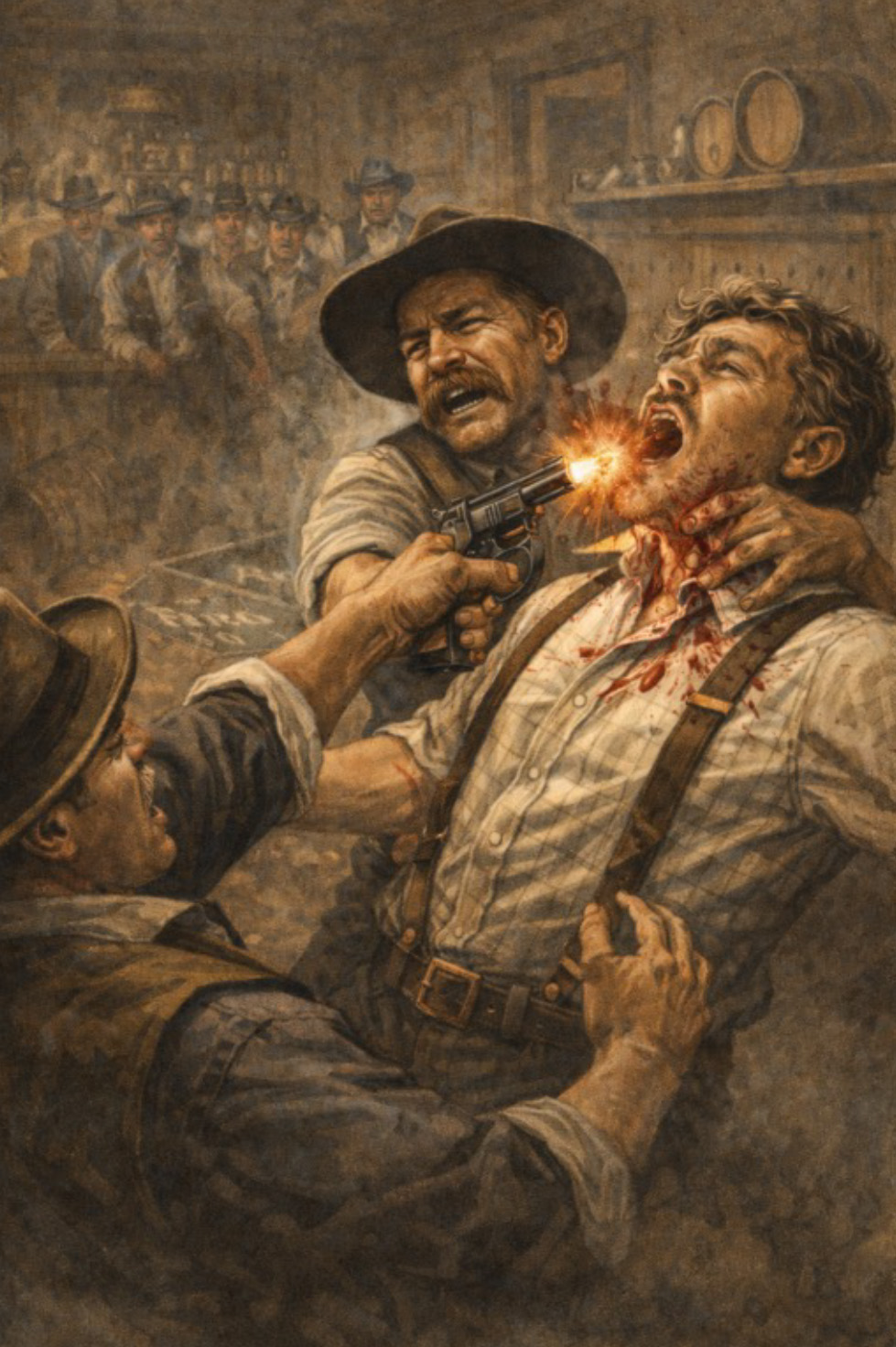
Madigan—who had been threatening to kill Ole for months—drew his gun. Ole reacted instantly, rushing him. As he did, Joe Hamilton seized Ole from behind in an attempt to restrain him. Ole broke free long enough to knock Madigan to the ground, sending the gun flying from Jack’s hand. Ole picked it up and struck Madigan twice in the head. When Madigan lunged again, Ole fired. The bullet entered Jack’s neck and severed his jugular vein. Death came swiftly.
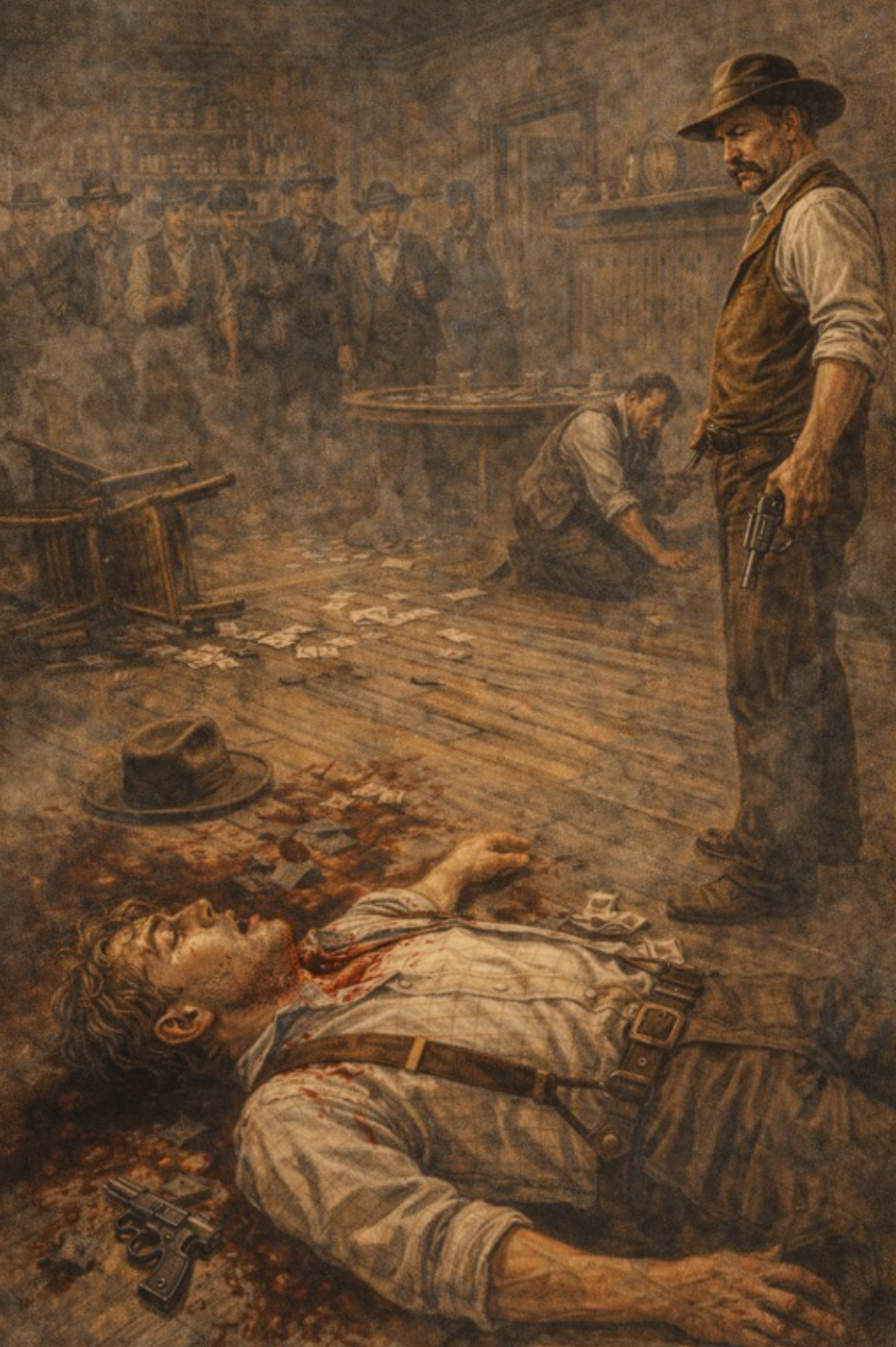
Even then, the struggle continued. Hamilton again grabbed Ole from behind, and from that position Ole shot him in the thigh with Madigan’s gun. As Hamilton fell, he reached for a weapon of his own. Ole fired again, this time striking him in the arm.
 Jack Madigan’s long-nurtured jealousy—fed by alcohol, failure, and the success of a man he could not forgive—had finally consumed him. Following an autopsy, his body was returned to Tonopah for burial in the Old Tonopah Cemetery, where the Eagles Lodge conducted his funeral.
Ole Elliott faced no charges. One newspaper declared that “Madigan was looking for trouble and got what he deserved,” while another dismissed him simply as “a bad man.”
In a final twist at odds with Jack’s reputation, it emerged that he was married. A few days after his burial, his widow arrived in Tonopah from Salt Lake City to settle his estate, insisting, “He was not a desperado, and he never carried a gun.”
The record, the witnesses, and the blood on the floor of the Combination Cellar told a different story—and Tonopah, as it so often did, sided with the dead man’s fate rather than the living who mourned him.
Editor’s note: All illustrations are prepared by Joni Eastley with the help of an AI program.
